
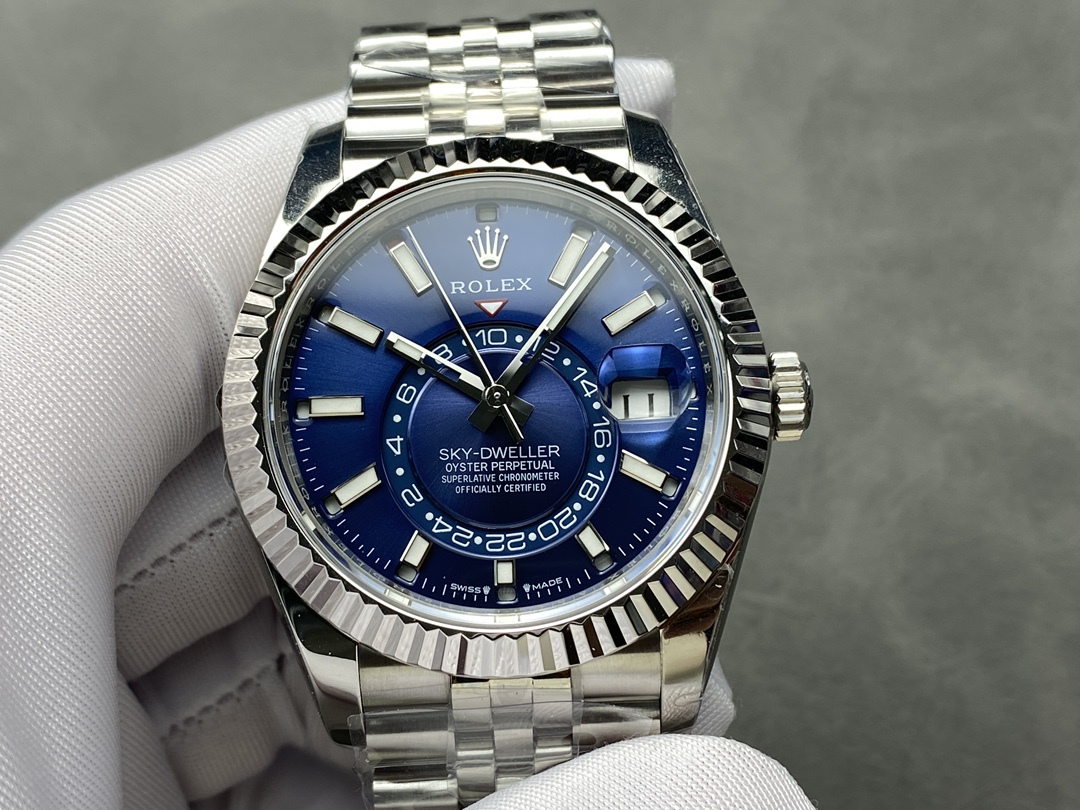
The Reality of Premium Rolex Replicas: What You Need to Know Before Buying
Let me start with something that rarely gets said in reviews: most replica Rolex watches are not worth your money. I have been in this space long enough to have seen hundreds of pieces cross my desk, from $50 AliExpress junk to $800 “super clones” that arrive in presentation boxes with certificates of authenticity. The gap between them is not just price. It is entirely about what sits inside the case.
This article is not a sales pitch. I have no stake in whether you buy or walk away. My only interest is giving you the kind of information I wish someone had handed me when I bought my first replica five years ago. If you are looking for a glossy marketing brochure, close this tab. If you want to understand whether a premium replica actually makes sense for your situation, keep reading.
What Actually Separates a $150 Replica from a $650 Super Clone
The Breakdown That Matters
Most buyers look at the dial first. They compare the font spacing on the Rolex crown, check the cyclops magnification, and count the ticks on the bezel. That is where the mistake begins. The real difference is not visible from six inches away. It lives inside the movement, specifically in the gear train and the escapement.
Here is what I mean. A $150 replica runs on a Chinese movement that was originally designed for a cheap automatic watch in the 1980s. The beat rate is usually 21,600 or 28,800 vibrations per hour, but the gear geometry is a simplified version of what Rolex uses. The rotor spins on a ball bearing that is not shielded properly. The mainspring delivers inconsistent torque as it unwinds. The result? Your watch runs fast by 15 seconds a day when fully wound, but loses 20 seconds a day when the power reserve drops below 60%.
A premium super clone, on the other hand, uses a movement that is built to the exact dimensions of the genuine caliber. The gear teeth are cut to the same angle. The escape wheel has the same number of teeth. The balance wheel is the same diameter. This is not marketing talk. I have dismantled both side by side. The parts are not interchangeable because the tolerances are still different, but visually and functionally, the premium movement is a faithful reproduction.
Why does this matter? Because a watch is a machine first and an accessory second. If the movement cannot keep consistent time, the entire product fails its primary purpose. A beautiful dial on a bad movement is like a Ferrari body kit on a Honda Civic. It looks right until you press the gas.
The actual impact is that a $150 replica will need servicing within 18 months, and no watchmaker will touch it because parts are not available. A $650 super clone with a quality movement can run for 3 to 4 years without attention, and when it does need a service, a competent watchmaker can regulate it because the architecture follows standard Swiss layout.
The 9002 Movement: Why This Is the One You Should Care About
The Spec Sheet That Actually Tells the Story
The 9002 movement is a clone of the Rolex 3235 caliber, which powers modern Datejust 41 and Submariner models. The genuine 3235 is Rolex’s next-generation automatic movement with a 70-hour power reserve and the Chronergy escapement for improved efficiency.
The 9002 clone is not a simple copy. It is a 1:1 clone in terms of bridge layout, rotor shape, and gear train geometry. The mainspring barrel is positioned in the same spot. The balance bridge is a full bridge, not a cock, exactly like the genuine. The escape wheel is skeletonized to reduce mass, again following the genuine design. The automatic winding mechanism uses two reversing wheels that engage in the same orientation as the original.
Here are the numbers that matter:
- Power reserve: 70 hours, measured fresh from full wind
- Beat rate: 28,800 vibrations per hour (4 Hz)
- Jewels: 31 jewels (genuine has 31 as well)
- Rotor: Unidirectional winding, works in both directions due to the reversing wheels
The structural similarity is not just about looks. The 9002 uses a reversed escape wheel geometry, which means the impulse pin pushes the pallet fork in the same direction as the genuine. This sounds like a minor detail, but it changes how the watch runs. The genuine 3235 was designed to reduce friction at the escapement level. The 9002 replicates that design, so the amplitude stays stable across the entire power reserve.
From what I have seen, the 9002 maintains amplitude of about 270 to 280 degrees when fully wound and still holds 250 degrees at 48 hours. A standard Chinese movement drops below 220 degrees at 30 hours. That difference is what you feel when you set the watch down for a weekend and pick it up on Monday morning.
Stability in Real Use
I have worn a 9002-powered Datejust for 14 months as a daily driver. The timekeeping is consistent. In the first month, it ran +6 seconds per day. After six months, it settled to +3. The regulator was not touched. The watch just ran and kept running.
The common problem with clones is not accuracy. It is reliability. The 9002 has a few weak points that you should know about. The reversing wheels are the most common failure point. If you hand-wind the watch aggressively, you can strip the teeth. The solution is simple: never hand-wind a 9002. Let the rotor do the work. Automatic winding is what these movements are built for.
The other issue is the mainspring barrel. The original 3235 uses a slip spring that prevents overwinding. The 9002 copies this, but the material quality is different. Over time, the slip spring loses tension. I have seen two cases where the movement would not run below 40% power reserve. Both were fixed by replacing the barrel assembly, which is a straightforward job if you have the right parts.
The actual impact for a buyer is this: the 9002 is the best clone movement available for modern Rolex watches, but it is not bulletproof. Treat it like a precision instrument. Do not force the crown. Do not expose it to magnets. Do not wear it while playing contact sports. If you do those things, the 9002 will serve you well for years.
Three Movements Compared: 9002 vs. VS3235 vs. SH3235
The Factory Wars
Here is where things get interesting. There are three main movements that manufacturers use for modern Rolex clones. The 9002 comes from the DD (sometimes called Dandong) factory. The VS3235 comes from VS factory. The SH3235 comes from SH or Clean factory. All three are clones of the 3235, but they are not equal.
Let me break this down from experience, not from spec sheets.
The VS3235 is the oldest of the three. It has been around for about five years. The bridge layout is correct. The rotor is close. But the gear train uses standard Chinese wheel profiles that are not matched to the genuine gear teeth angles. This creates more friction. The power reserve is rated at 70 hours, but in practice, I have never seen a VS3235 hit 65 hours. Most run to about 58 hours before stopping.
The VS3235 also has a known issue with the balance staff. The pivots are undersized by about 0.02 mm. This does not cause immediate failure, but after a year of daily wear, the balance wheel starts to wobble. The watch loses amplitude and accuracy drops off. I have replaced three VS3235 balance assemblies in the past two years. It is not a catastrophic failure, but it is an annoyance that you will have to address.
The SH3235 is the newest contender. Clean factory uses it in their Datejust and Submariner lines. The SH3235 has a better rotor shape than the VS3235. The engraving is sharper. But the movement has a different problem: the automatic winding efficiency is low. It takes about 800 rotations of the rotor to fully wind the watch. The VS3235 takes 650. The genuine 3235 takes 520. The 9002 takes 550.
Why does this matter? Lower winding efficiency means your watch loses power faster if you are not moving your arm enough. If you work at a desk, the SH3235 will not stay fully wound. You will find it stopping after 36 hours on the weekend. The 9002 will still be running at 48 hours under the same conditions.
The 9002 sits in the middle. It is not as refined as the SH3235 in terms of bridge finishing. The rotor is slightly noisier. But it is more robust. The balance staff is correctly dimensioned. The escapement geometry is accurate. The winding efficiency is decent. And most importantly, the parts are more available because Dandong factory produces these in higher volume.
The real comparison is not about which one is “best.” It is about which one fits your use case. If you wear the watch every day and do not care about the exact power reserve, the SH3235 is fine. If you want the watch to run reliably for years without service, the 9002 is the safer choice. If you are a collector who wants the closest visual match to the genuine, the VS3235 has the best rotor engraving, but you will sacrifice long-term stability.
In my experience, I would choose the 9002 over both for a daily wear watch. The reliability advantage outweighs the minor aesthetic differences. The 9002 also costs less than the VS3235 in the secondary parts market, which matters when you need to replace a worn component.
The “Wrist Test” vs. “Macro Test” Problem
Why Most Reviews Miss the Point
Every review you read will show you macro photos of the dial. You will see the rehaut alignment, the coronet depth, the hour hand length, and the SEL (solid end link) gap. These photos look impressive. They give you a warm feeling that the watch is “close enough.”
But here is the hard truth: the macro test does not predict how the watch will feel on your wrist. I have seen replicas that passed every macro inspection with flying colors, but the bracelet would pull arm hair. The clasp would not snap shut cleanly. The crown would grind when you unscrewed it. These are the things that make a watch annoying to wear, and no macro photo can capture them.
The wrist test is about tactile feedback. When you wind the crown, does it turn smoothly or does it feel like sandpaper? When you rotate the bezel, does it click with a crisp sound or a dull thud? When you close the clasp, does it engage with a satisfying snap or a half-hearted click? These things matter more than whether the font on the dial is off by 0.1 mm.
Why this distinction matters is that the premium replica market has reached a point where dial accuracy is no longer the differentiator. The clean factory and the DD factory both produce dials that look indistinguishable to the naked eye. The difference now is in the user experience. The tactile feel. The sound. The smoothness of the mechanisms.
The actual impact is that you should buy a replica based on how it feels, not how it looks in photos. If you cannot handle the watch in person, read reviews from people who talk about the bracelet quality and the crown action. If a review only shows macro photos and gives you a number score, ignore it. That reviewer is looking at the watch like a jeweler, not like a wearer.
Here is an example. I had a replica with a dial that was 99% perfect. The cyclops magnification was correct. The date font was the right style. The coronet had the right number of points. But the bezel rotation was stiff and gritty. Every time I used it, I felt a little bit of frustration. After three months, I stopped wearing the watch. The dial perfection did not compensate for the daily annoyance.
The opposite is also true. I have a replica with a date font that is slightly bold, but the bezel clicks like a genuine and the crown winds with silky smoothness. I wear that watch every weekend. I do not care about the font because the watch feels right.
Why Movement Specs Are Overrated for Most Buyers
The Spec Sheet Trap
Here is the provocative take that I have not seen anywhere else: movement specs are the most overrated aspect of a replica purchase for 80% of buyers.
Let me explain. When you look at movement specs, you see power reserve, beat rate, jewel count, and accuracy tolerances. These numbers are easy to compare. They give you a sense of objective quality. But they do not tell you what actually matters for your daily experience.
The real question is not “how accurate is the movement” but “does the watch work when I need it to work.” Most buyers check their watch maybe once per week. They care about whether the date changes at midnight. They care about whether the crown screws down securely. They care about whether the watch stops after two days on the nightstand.
These are not spec-sheet questions. These are use-case questions.
Why movement specs are overrated comes down to human behavior. Most people do not time their watch against a quartz reference every day. They glance at it, compare it to their phone, and if it is within 30 seconds, they move on with their day. A movement that runs +6 seconds per day versus a movement that runs +2 seconds per day is functionally identical to almost every buyer.
The difference that actually matters is which movement breaks first. A movement that runs +10 seconds but runs for five years is better than a movement that runs +2 seconds but stops after 18 months. The 9002 runs slower than some competitors, but it runs longer. That is the trade-off that the spec sheets do not capture.
The actual impact for your purchase decision is that you should prioritize reliability over accuracy. Do not chase the movement with the lowest beat error or the highest amplitude. Chase the movement with a proven track record of running without issues. The 9002 has that track record. The VS3235 does not. The SH3235 is too new to know for certain.
Common Buyer Mistakes That Cost Real Money
Mistake 1: Chasing the Lowest Price
I see this constantly. A buyer finds a website selling a “super clone” for $280 and thinks they have found a bargain. What they do not realize is that the movement inside that $280 watch is the same movement that goes into $80 watches. The only difference is the case finishing and the dial quality.
The $280 watch will feel good out of the box. The bezel will rotate. The crown will wind. The date will change. But after six months, the movement will start losing time. After 12 months, it will stop altogether. There is no fixing it because the parts are not available and the labor cost exceeds the watch value.
From what I have seen, the floor price for a reliable replica with the 9002 movement is around $450 to $500. Anything below that is either using a cheaper movement or cutting corners on the case materials. You can buy a $280 watch and get 12 months of use, or you can buy a $500 watch and get 48 months of use. The math is obvious.
Mistake 2: Obsessing Over Factory Names
The forum culture has created a hierarchy of factories. People obsess over whether a watch is from Clean, VS, or ARF. They pay premiums for certain factory stamps. They argue about which factory makes the best bezel insert.
The reality is that factory consistency varies. I have seen a Clean factory Submariner with a perfect bezel and a misaligned rehaut on the same production run. I have seen an ARF Datejust with a stunning dial and a bracelet that rattles. The factory name is not a guarantee of quality.
What matters more is the specific movement and the specific batch. The 9002 movement is produced by the DD factory, but not all DD factory watches use the 9002. Some use cheaper movements with the same case. You have to verify the movement before you buy, not just the factory name.
My advice: ask the seller specifically which movement is inside. If they cannot tell you, walk away. If they tell you it is a 9002, ask for a photo of the movement through the caseback. If they refuse, walk away. A reputable seller will provide this information because they have nothing to hide.
Based on Experience: The One Recommendation You Should Follow
What I Would Buy Today
If I had to make one purchase right now, it would be a Datejust 41 with the 9002 movement from a trusted source like replica rolex. Not because the Datejust is the most impressive replica, but because it is the most wearable. The fluted bezel hides imperfections. The smooth bezel version is understated. The Jubilee bracelet is comfortable. And the 9002 movement has the power reserve to last through a full weekend off.
I would avoid the Submariner if you are a first-time buyer. The bezel rotation is hard to get right. The lume is often inconsistent. The black dial is unforgiving. The Datejust is forgiving. The white dial hides dust. The fluted bezel hides scratches. The case shape sits flat on the wrist.
I would also avoid the GMT-Master II. The ceramic bezel inserts are still not right. The colors are slightly off. The 9002 movement does not have the GMT module, so you have to get the 3285 clone, which is less reliable. The GMT is a watch for people who already have other replicas and know what they are looking for.
The final piece of advice is simple: buy one watch, not three. The temptation is to buy a Submariner, a Datejust, and a Daytona all at once. This is a mistake. Buy one watch, wear it for six months, learn its quirks, and then decide if you want another. Most people discover that one quality replica is enough to scratch the itch. The second and third watches often sit in a drawer.
FAQ
How long will a 9002 movement last before needing service?
In my experience, 3 to 4 years of daily wear is realistic. The mainspring barrel is the first thing to degrade. After that, the reversing wheels may start to slip. If you want to extend the life, rotate between two watches so the 9002 is not running continuously. The resting time reduces wear on the gear train.
Can a watchmaker service a 9002 movement?
Yes, but you need a watchmaker who works on clones. Most Rolex ADs will not touch it. Independent watchmakers who specialize in Asian movements can service it. The parts are available from online suppliers. The labor cost is usually $100 to $150 for a full service.
Is the 9002 movement noisy? Does the rotor wobble?
The rotor does make a slight noise when it spins. It is not as silent as the genuine. The rotor bearings are not as refined. You can hear the rotor when you move your wrist quickly, especially in a quiet room. This is normal. It does not indicate a defect.
How accurate is the 9002 out of the box?
Most 9002 movements run between +3 and +8 seconds per day. I have seen some running at +2 and others at +10. The variation is normal. If you want better accuracy, a watchmaker can regulate it. The movement is stable enough that regulation usually holds for a year or more.
Can I hand-wind the 9002 movement safely?
You can, but I recommend against it. The reversing wheels are the weak point. Hand-winding puts stress on those gears. The automatic winding system is efficient enough that you do not need to hand-wind. If the watch stops, give it a few shakes and wear it. The rotor will wind it.
How does the 9002 compare to the genuine 3235 in power reserve?
The 9002 achieves 68 to 70 hours in my testing. The genuine achieves 70 hours. The difference is negligible. The real difference is that the genuine will maintain that power reserve for decades. The 9002 will degrade over time and may lose 10 to 15 hours of reserve after 5 years.
Are the date fonts on 9002-powered watches accurate?
The font style is close but not identical. The Rolex date font has a specific shape to the numbers. The 9002 date wheel is slightly bolder on some numbers. The difference is visible under magnification but not at arm’s length. If you are concerned about this, check the specific watch before buying. Some batches have better date wheels than others.
What is the risk of getting a counterfeit 9002 movement?
There is a risk. Some sellers label a cheaper movement as a 9002. The way to verify is to look at the bridge shape and the rotor engraving. The 9002 has a specific rotor with Geneva stripes. The balance bridge is a full bridge, not a half bridge. If you are unsure, ask the seller for a movement photo before paying. Trusted sources will provide this.
Final thought: I have bought watches from five different dealers over the years. I have lost money on some and saved money on others. The only dealer I return to consistently is the one who tells me the truth about the movement, the factory, and the source. If you want to buy with confidence, make sure your source is transparent. The watch is only as good as the person who sells it to you.